
Basics of objective
gait analysis
Join us on-site or online!

Uppsala, Sweden: 24–25 September
Online: 2–3 October

Click below to read more and register your place.

Objective gait analysis is becoming an increasingly valuable tool in equine practice. Whether you're considering implementing it in your daily work or already using it and want to strengthen your interpretation skills, this course provides a practical and evidence-based foundation.

Led by Dr. Marie Rhodin, veterinarian, researcher and Professor at the Swedish University of Agricultural Sciences (SLU), and Emma Persson, veterinarian and Specialist in Equine Diseases, the course combines the latest scientific knowledge with real clinical cases to help you confidently integrate objective gait analysis into your decision-making.

The course focuses primarily on Sleip, while also providing an overview of other objective gait analysis systems and their applications in clinical practice.

During the course, you will learn about:

  • The principles of objective gait analysis
  • Data collection and how to obtain reliable measurements
  • Interpretation of movement asymmetries
  • Lungeing, flexion tests and perineural analgesia (PPE)
  • Compensatory lameness patterns
  • Objective gait analysis of ridden horses
  • Clinical applications and case discussions
  • Special considerations for Icelandic horses and Standardbred trotters

Through a combination of lectures, case-based discussions and practical examples, you'll gain the knowledge and confidence to make objective gait analysis a valuable part of your clinical toolkit.
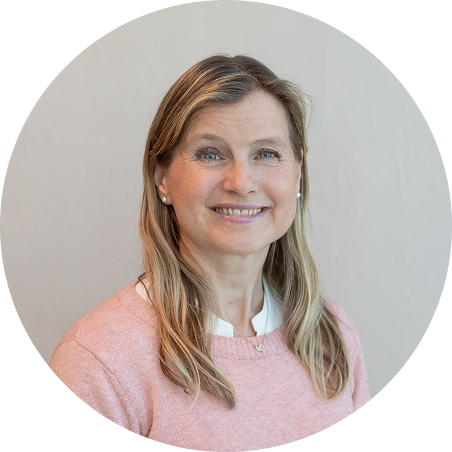

Meet the experts
Marie Rhodin, DVM, Dipl. ACVSMR, ECVSMR,
Professor at the department of AnimalBiosciences, Swedish University of Agricultural Sciences. She graduated 2003, PhD in 2008where she studied horse and rider interaction. She has experience in objective motionanalysis for lameness detection with techniques as high-speed cameras ,inertial measure unitsand computer vision. Her main research focus is equine orthopedics, gait analysis andlameness in different species and has published more than 80 peer-reviewed scientificpapers.
Emma Persson-Sjödin, DVM, PhD
Obtained her PhD with a thesis on the clinical significance and interpretation of verticalmovement asymmetries in riding horses under different circumstances and the use of objectivesystems to improve orthopaedic diagnostics. Today she divides her time between equinebiomechanics research focusing on clinical interpretation, orthopaedic work at the UniversityEquine Clinic and lectures in equine anatomy.