Sleip was first validated against a multi-camera motion capture system in a peer-reviewed study published in 2023. Since then, the technology has continued to develop through regular updates, internal validation and use in over a million analyses across clinical, research and regulatory environments.
Millimetre
precision
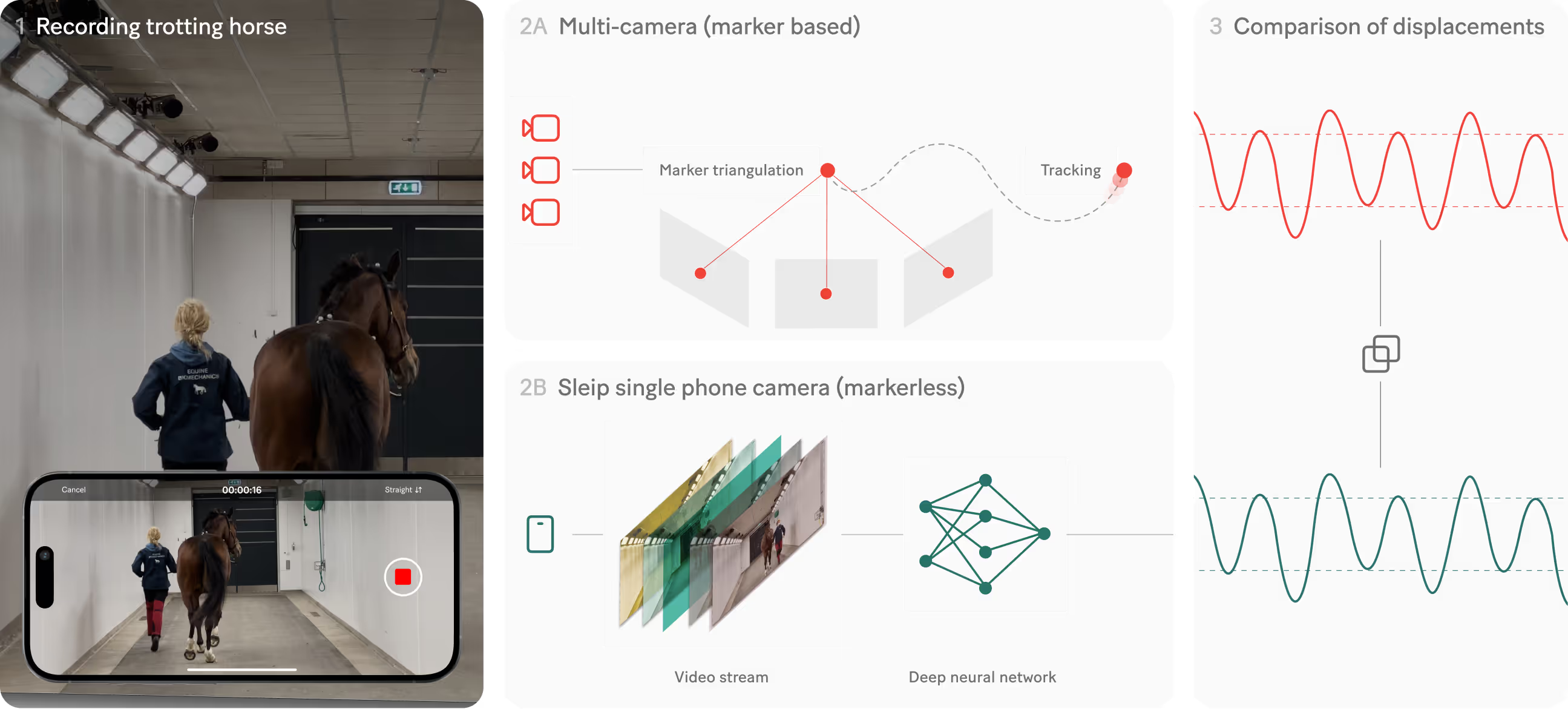
The study compared measurements of the vertical motion of head and pelvis obtained from a markerless system using Sleip, with those obtained using a multi-camera motion capture system with reflective markers attached to the horse's body. Simultaneous, synchronised recordings from both systems were compared.
The study found close, millimetre-level agreement between the two systems, showing that smartphone-based markerless analysis can measure movement asymmetry with clinically relevant precision.
Markerless technology
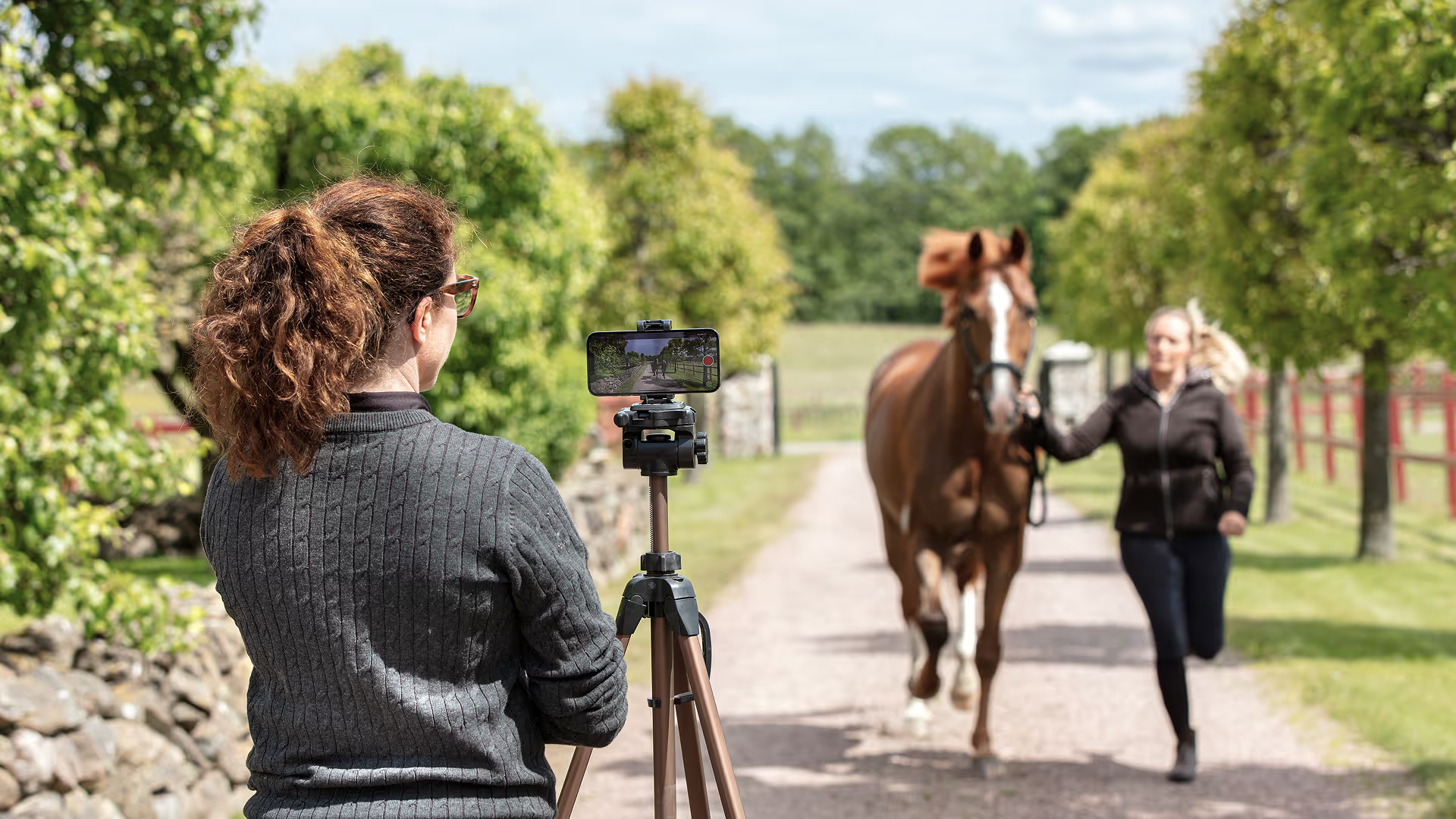
Computer vision is a subcategory of artificial intelligence focused on extraction of information from images and video. It provides a compelling means for objective orthopaedic gait assessment in horses using accessible hardware, such as a smartphone, for markerless motion analysis.
The study was led by Dr. Elin Hernlund and carried out by a group of researchers from the Swedish University of Agricultural Sciences, KTH Royal Institute of Technology and the engineering team at Sleip.
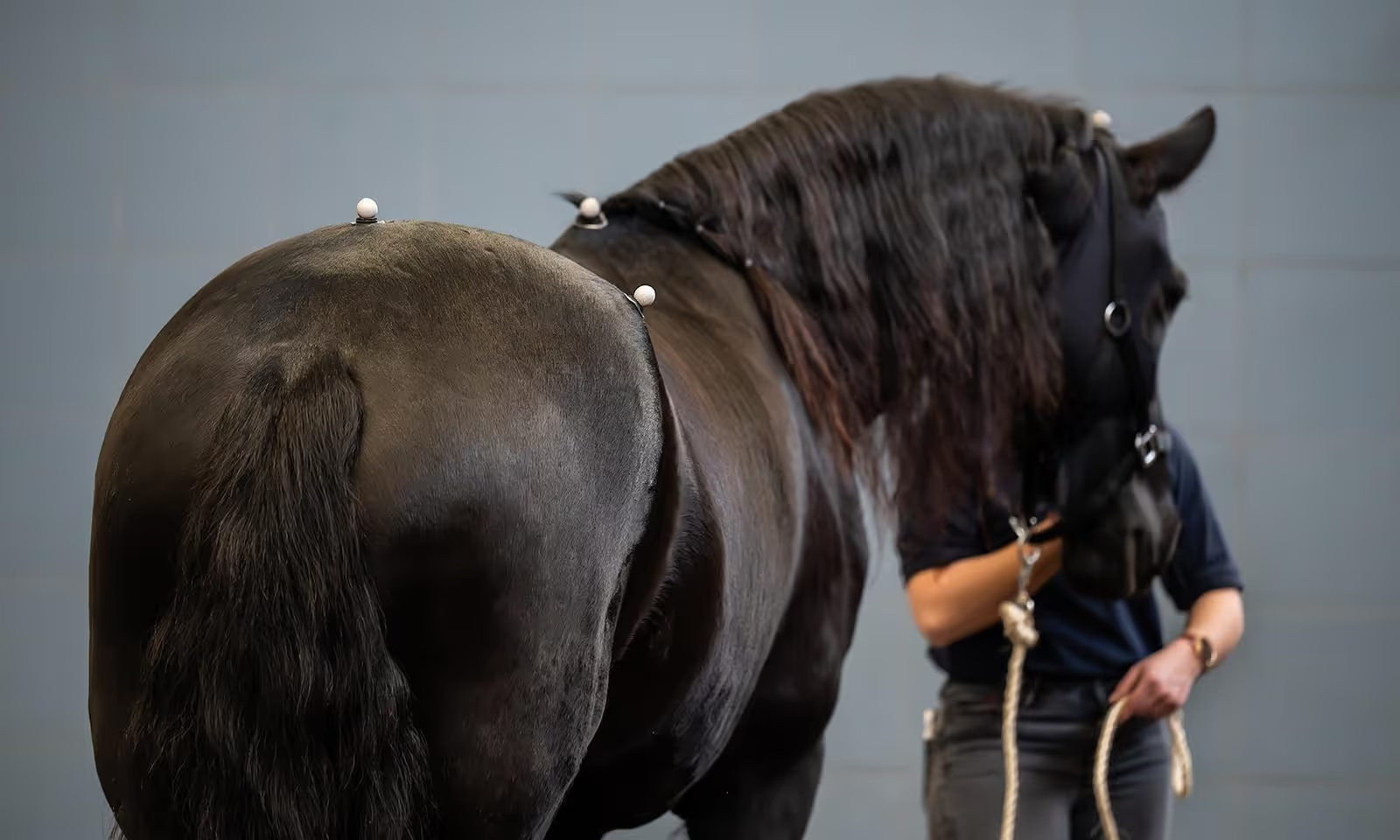
Study methodology
Twenty-five horses were recorded with a smartphone (60 Hz) and a multi-camera system (200 Hz) while trotting two times back and forth on a 30-meter runway. The smartphone video was then processed using artificial neural networks to detect the horse's direction, action, and motion of body segments. After filtering, the vertical displacement curves from the head and pelvis were synchronized between systems using cross-correlation. Simultaneous, synchronised recordings from both systems were compared.
This rendered 655 and 404 matching stride segmented curves for the head and pelvis respectively. From the stride segmented vertical displacement signals, differences between the two minima (MinDiff) and the two maxima (MaxDiff) respectively per stride were compared between the systems. Trial mean difference between systems was 2.2 mm (range 0.0–8.7 mm) for head and 2.2 mm (range 0.0–6.5 mm) for pelvis. Within trial standard deviations ranged between 3.1–28.1 mm for MC and between 3.6–26.2 mm for SC.
From research to everyday use
Peer-reviewed validation provides the scientific foundation. Continuous development and real-world use help ensure the technology remains relevant in practice.