The future of equine practice
Based on a global survey of 107 equine veterinarians in the ISELP community, Equine lameness insights 2026 explores opportunities for earlier intervention, the growing demands of everyday practice and the future of the equine veterinary profession.
Get the full report below
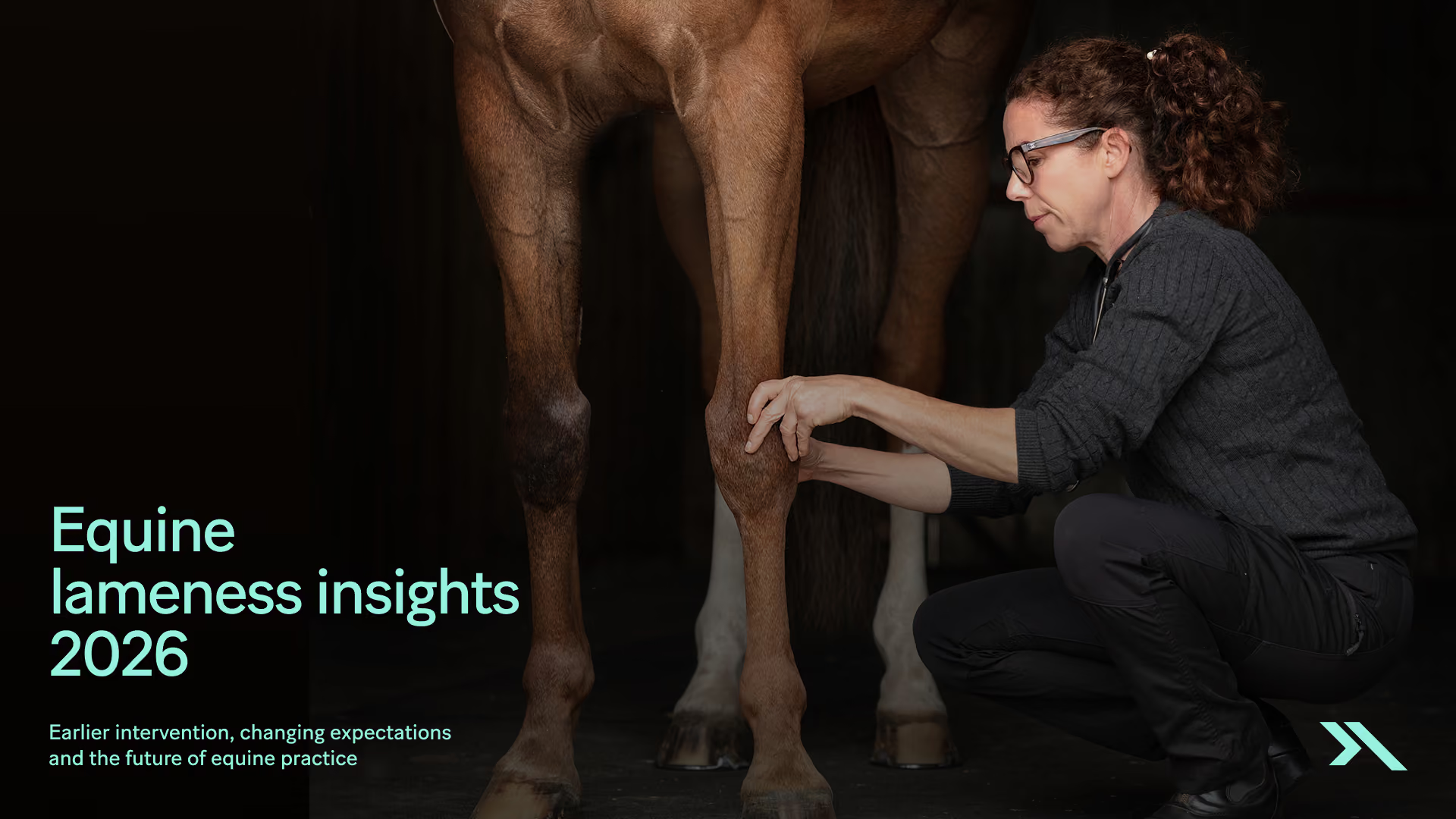
A woman wearing glasses and dark clothing crouches beside a horse, examining its front leg in a dark setting, with text reading 'Equine lameness insights 2026' and 'Earlier intervention, changing expectations and the future of equine practice.'

Get the full report

Fill in the form to receive your copy of Equine lameness insights 2026.
87%
Earlier intervention
Nearly nine in ten equine vets frequently or occasionally see cases where earlier intervention could have prevented more serious problems. The findings highlight the continued importance of recognising changes early and acting on them.
92%
See value in historical movement data
More than nine in ten vets see value in having access to historical asymmetry data for individual horses. Tracking movement over time could provide valuable context when assessing subtle changes.
~50%
Spend 3+ hours a week on unpaid client communication
Remote advice and client messages are becoming part of everyday practice — often without being billed.
8%
Would recommend the profession without hesitation
Only 8% of vets with less than 10 years’ orthopaedic experience would recommend equine practice to veterinary students without hesitation, compared with 62% of those with more than 20 years’ experience. The difference raises questions about support and the future of the profession
Free trial
Sign up for a 14 day free trial.
FAQ

Explore

Woman in glasses and a grey sweater looking at her smartphone while a brown horse nuzzles her ear against a dark background.
User guides

Explore

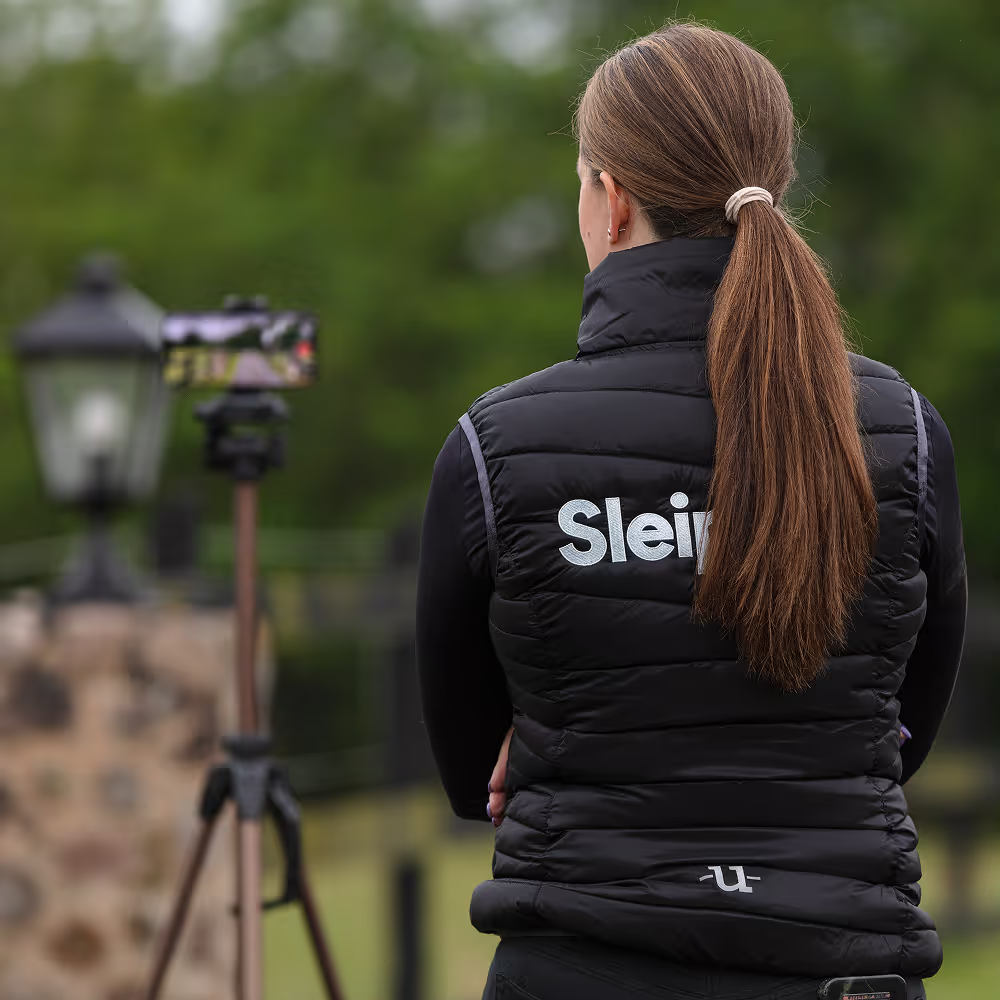
Woman with long brown hair tied in a ponytail wearing a black jacket with 'Sleip' printed on the back, standing outdoors facing a smartphone on a tripod.
User interviews

Explore

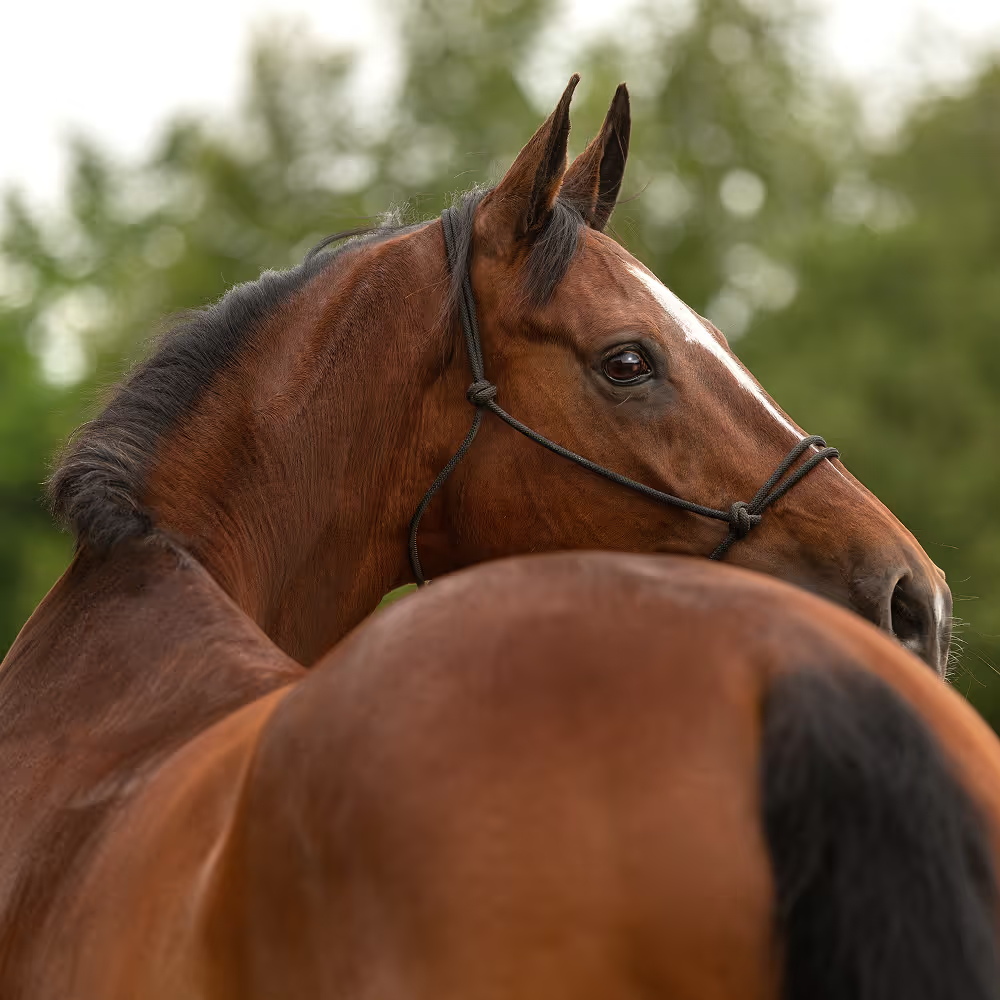
Close-up of a brown horse with a black mane and a white stripe on its face, looking backward in an outdoor setting.