25 January 2023
The full study confirming the capabilities Sleip in detecting lameness in horses has been published in the open access journal Animals. Veterinarians and researchers alike can now access study details for a better understanding of the measurement metrics and how the tool can be used in their work.
"We are so pleased to publish a validation of the first available AI tool for veterinary orthopedic gait analysis. A summary of the study results was presented at the ICEEP conference 2022. Today we are excited to make the full-length article with a more detailed account of study methods and results openly accessible," says Dr. Elin Hernlund, DVM, PhD and co-founder of Sleip.
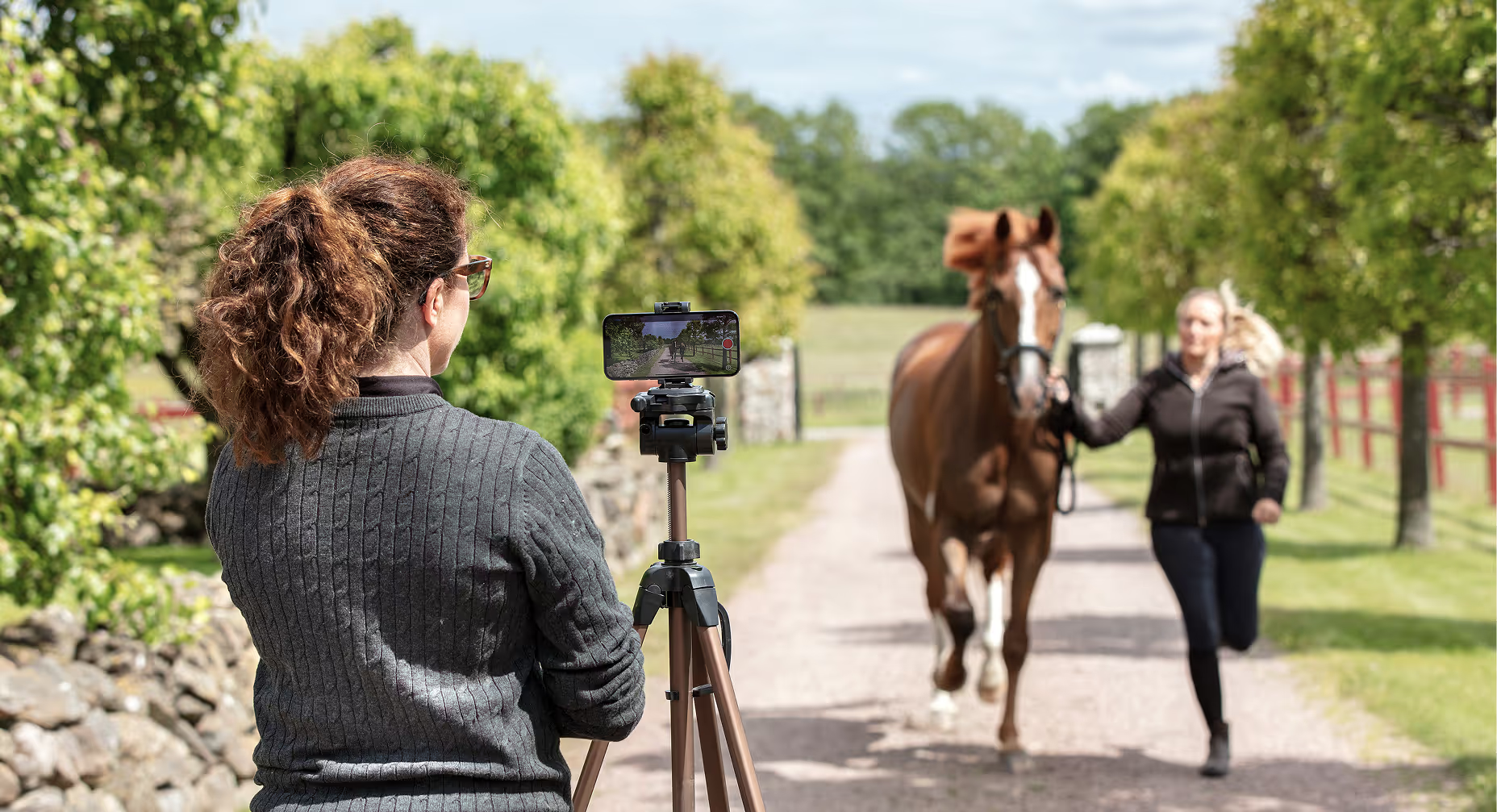
Computer vision is a subcategory of artificial intelligence focused on extraction of information from images and video. It provides a compelling new means for objective orthopedic gait assessment in horses using accessible hardware, such as a smartphone, for markerless motion analysis.
The study was led by Dr. Elin Hernlund and carried out by a group of researchers from the Swedish University of Agricultural Sciences, KTH Royal Institute of Technology and the engineering team at Sleip.
The study compared measurements of the vertical motion of head and pelvis obtained from a markerless system using a smartphone single camera computer vision application, with those obtained using a multi-camera motion capture system with reflective markers attached to the horse's body. Simultaneous, synchronised recordings from both systems were compared.
The results showed that the mean difference between the two systems' measurement of lameness was below 2.2 mm, indicating that, apart from being easy to use, the smartphone tool can detect asymmetry in a horse’s gait at clinically relevant levels.
“The accessibility of a smartphone makes it easier for veterinarians to use gait analysis as part of daily clinical practice, but also enables convenient gait monitoring over time”, says Elin Hernlund.