
1 December 2025
“I’ve always been interested in data,” he says. “When I was first exposed to objective gait analysis (OGA) more than ten years ago, I realised how much it could add. Even with years of experience, there are things you simply can’t see with the human eye — tiny asymmetries, compensations, subtle changes over time. OGA gives me those insights.”
Back then, some colleagues and clients teased him, asking if his eyes weren’t good enough. His answer was simple: “It’s like a microscope for blood samples. Nobody relies on the naked eye for that, so why should we not use tools to be able to be more granular about motion when we look at lameness?”
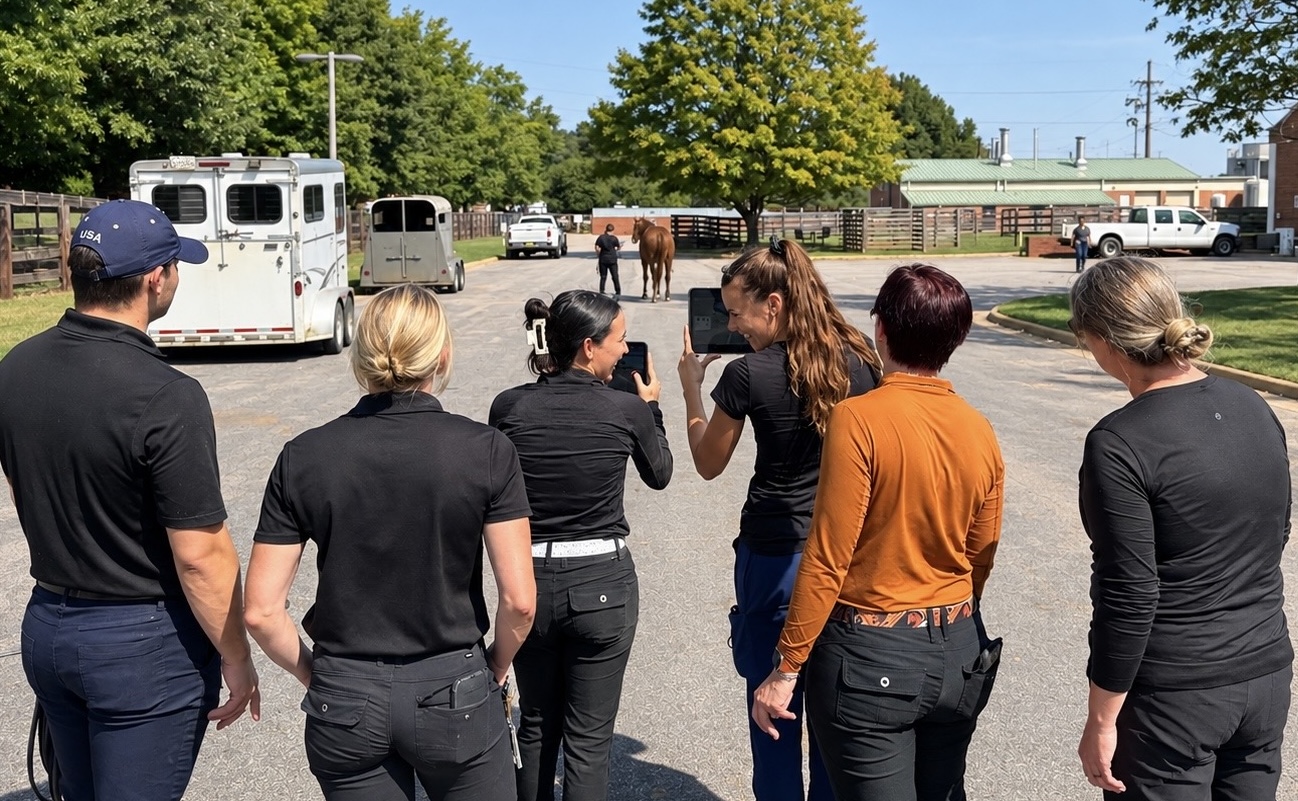
What excites Pol today is how accessible gait analysis has become. With Sleip, all he needs is his phone — and increasingly, the phones in his clients’ pockets. He now routinely asks owners to record their horses trotting and upload the videos for him to review. “It’s become a core part of how I work,” he says.
“Instead of driving out for every check-up, I can compare a new recording with the horse’s history and send back feedback. Owners get reassurance, and I can use my time for the cases that really need me in person.”
To make it more personal, Pol records his own screen while explaining the graphs, colour scales and what they mean for that individual horse. He talks it through, pointing out progress or setbacks compared to earlier exams. “That way, clients can see exactly what I see, and hear my interpretation. They’re not just being told, they’re part of the process.”
He charges £36 for a remote consultation, which clients find very reasonable. More importantly, he says, it changes the whole tone of communication.
“Owners often know something is wrong but struggle to explain it. When I show them the analysis, it validates their instincts and builds trust in what I’m telling them. They can literally see the progress over time. That changes the conversation completely.”
In rehabilitation cases especially, he says, owners are more motivated once they see the data. “It gives them confidence that the horse really is improving — or helps them understand why patience is needed. It brings us onto the same page.”
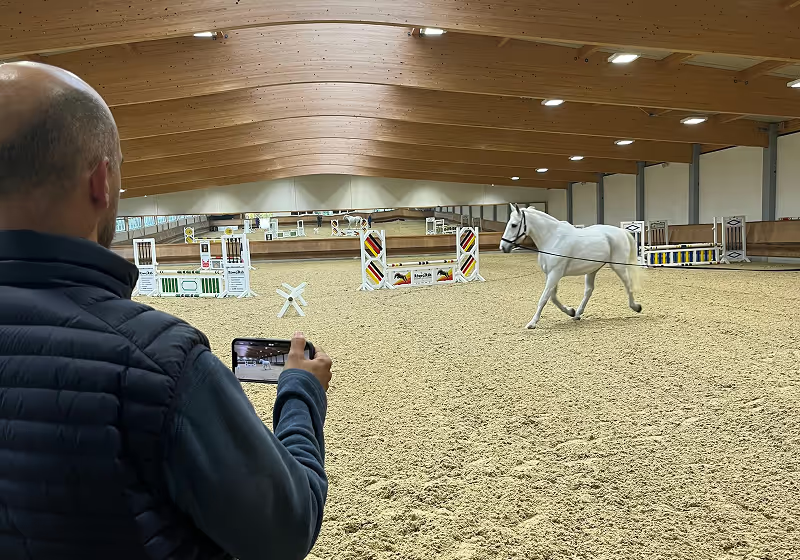
For Pol, the core benefits of the precise objective data is in supporting his clinical reasoning, helping him spot issues that the eye alone could miss. He recently saw a horse presented with what seemed like a straightforward forelimb lameness. But when he reviewed the analysis results, he noticed an additional hindlimb asymmetry hiding behind the obvious problem.
“Without Sleip, that injury might not have been picked up until much later. By detecting it early, we could adapt the treatment and rehab straight away. It changed the whole plan.”
It’s this ability to uncover hidden patterns that Pol believes makes gait analysis technology indispensable — especially for vets working independently. “When you work on your own, you don’t have colleagues to bounce ideas off every day. Sleip gives me the confidence of having that extra perspective.”
Asked what he would say to other independent practitioners, Pol doesn’t hesitate: “Try it. The interface is intuitive, the learning curve is quick, and you start seeing the benefits straight away. For me, the remote recordings in particular have changed how I work — they save me time and keep clients involved.”
Cost is another important factor for him. “As a solo vet, I’d never be able to afford one of the big mounted sensor systems — they can cost £15,000 or more. But I can cover the Sleip subscription easily, and it pays for itself through the remote consults. It makes objective gait analysis realistic for practices like mine. For me, it’s about working in a way that’s modern, practical, and better for horses and their owners.”
LV CertAVP(ESO), MRCVS, RCVS Advanced Practitioner in Equine Surgery (Orthopaedics)
Pol graduated from the Universitat Autònoma de Barcelona in 2009 and went on to gain international experience in Canada, the USA, and the UAE. He completed an internship in Canada and then worked in two clinics in Dubai before moving to the UK, where he earned a Certificate in Advanced Veterinary Practice (Equine Surgery - Orthopaedics) from the University of Liverpool. He is also an ISELP (The International Society of Equine Locomotor Pathology)member. After several years working at an Equine Practice in North Yorkshire, he recently established his own ambulatory practice, EBOR Equine Sports Medicine, specializing in Sports Medicine and Lameness.