
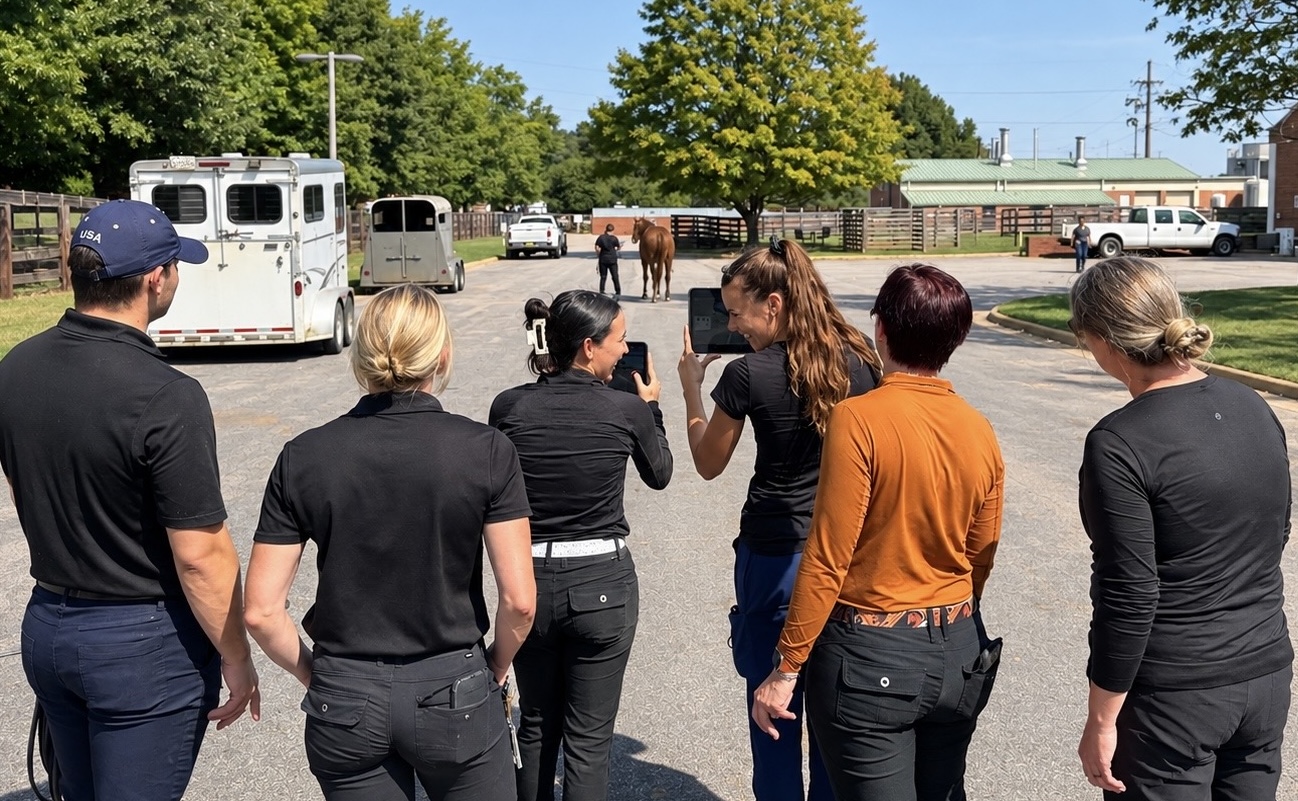
Lameness assessment asks a lot of the eye. It’s a skill built through repetition, feedback and experience – and it’s one of the more difficult parts of veterinary education to teach well. The horse moves quickly. The signs may be subtle. The clinical reasoning happens in real time. And in a busy hospital or field setting, there is not always enough time to pause, replay, explain and try again.
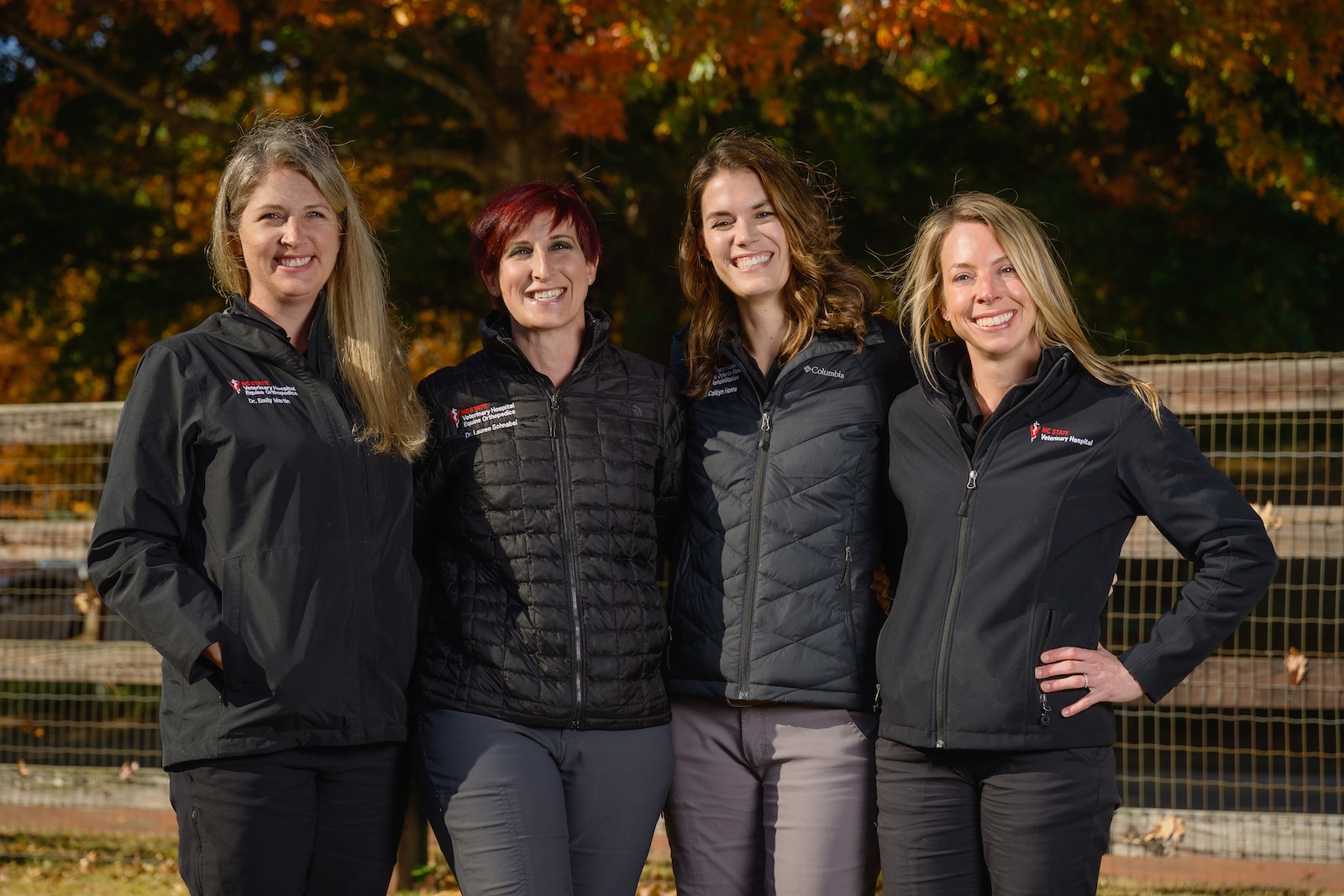
For Emily Martin, Clinical Assistant Professor of Equine Surgery at North Carolina State University, this is a familiar challenge.

“Lameness is one of the most important things that most equine practitioners have to deal with in the field,” she says. “It’s also one of the hardest things we have to teach to students.”
Martin, who focuses on orthopaedics and sports medicine at NC State, is leading a study on whether Sleip can support veterinary students as they learn to assess equine lameness. The first cohort of students were recently given access to Sleip, with a second cohort planned for later in the fall.
The aim is simple: can a video-based gait analysis tool help students learn more effectively than live observation alone?
In the NCSU study proposal, Martin and co-investigator Professor Lauren Schnabel note that novice students have been reported to have less than 30% accuracy in lameness assessment, contributing to low self-efficacy.
“It’s really hard for students to learn lameness when horses are moving in real time,” she says. “That, paired with a lack of feedback because of time constraints in a busy clinic, makes it really hard for them to learn what they’re looking for”, explains Martin.
Research suggests that the challenge is deeper than student inexperience. Even experienced clinicians do not always agree when assessing lameness subjectively, especially in subtle cases. Eye-tracking studies also show that expert clinicians develop particular ways of looking at the horse in motion — visual strategies that are hard for students to pick up through observation alone.1
In other words, students are not simply learning facts. They are learning how to see.
The NC State study is looking at whether Sleip can improve students’ accuracy and confidence in lameness assessment.
The study tests whether students using Sleip can identify and grade lameness more accurately than with live observation alone — and whether access to video review, slow motion and objective asymmetry data can reduce stress and support longer-term learning.
“Our main goal is to give students a tool for self-paced, deliberate practice,” says Martin. “They can review lameness exams and really start to learn the different elements that are important and play into how they’re diagnosing and how they’re seeing lameness in the field, kind of on their own time.”
Sleip uses smartphone video to measure gait asymmetry in horses. For students, the potential value is the chance to revisit what they saw: to watch a horse again in real time or slow motion, and compare their own observations with objective movement data.
The study includes 24 clinical-year veterinary students comparing two teaching methods: traditional live observation and Sleip-supported review.
Students complete a survey on their experience, confidence and stress around lameness diagnosis, as well as a video-based quiz to assess their starting level. One group then observes live lameness exams with an expert practitioner, while the other uses Sleip to review the same horses, with access to video, slow-motion playback and gait analysis data.
Students are then asked to decide whether each horse is sound or lame, identify the lame limb and grade the lameness.
Their answers will be compared with scores from three specialists in equine surgery or sports medicine. The study will also ask students how confident they feel, whether the process reduces stress, and whether learning is retained in both the short and longer term.
For young vets, confidence in lameness assessment can shape how they approach cases, speak with clients and make clinical decisions. It also matters in a profession where early-career pressure is already high.
Sleip’s 2025 Equine Lameness Insights report, based on a survey of 114 equine orthopaedic veterinarians in the ISELP community, found that early-career vets report lower confidence in detecting subtle lameness and a higher self-reported risk of leaving the profession due to workload and stress.
That gives lameness education a wider importance. Helping students become more confident and accurate is not just about passing exams. It is about preparing them for the realities of equine practice.
If the study shows gains in accuracy and confidence, Martin hopes Sleip could become part of lameness teaching earlier in the veterinary curriculum.
“We’re hoping that if we get good data with the study, we’ll introduce this not only to clinical year students, but also start introducing it earlier in the preclinical curriculum,” she says. “So that by the time they’re graduating, becoming early career practitioners, they’re already feeling very confident and competent in their ability to diagnose lameness.”
That is the heart of the study: not replacing clinical teaching, but strengthening it.
Students still need experienced clinicians. They still need live horses, discussion, context and judgement. But tools like Sleip may give them something traditional teaching often struggles to provide: time to look again.
For a skill as subtle as lameness assessment, that second look can matter. It allows students to slow the horse down, compare what they saw with objective data, and build the pattern recognition they will need in practice.
As objective gait analysis becomes more common in equine care, the next question is not only how vets use these tools in diagnosis — but how they can help train the next generation.
1 Hardeman AM, Egenvall A, Bragança FMS, et al. Visual lameness assessment in comparison to quantitative gait analysis data in horses. Equine Veterinary Journal. 2022;54:1076–1085.


.avif)