2 June 2023
Jan-Hein is a horseman through and through, his eyes light up as he talks about his job:
“I love horses, and being able to help these wonderful animals is a privilege I am thankful for every day, and which drives me. On top comes the fact that the job is never boring; new things happen every day, and I still learn new things every day.”
"In general, I like challenges. They make you grow. But I always want to do a good job, and sometimes it’s difficult to get enough time. So, I would say finding the time. Another challenge is to keep everybody happy and make owners and riders understand what is best for their horses. It can also be tricky to know when exercise is best for a horse – and when rest is better. With people who need to rest, you can tell them to be still, but you can’t do that with a horse."
"I’ve loved horses ever since my childhood in the Netherlands. We had relatives who owned horses and I went to their farm to ride every vacation. When I was 12 years old, I witnessed a vet taking care of a horse. Ever since then, I’ve wanted to be a vet. After studying in the US and Belgium, I met my wife and we moved to Germany. I set up business with colleague Marc Koene and we worked for Paul Schockemöhle between 1993-2000. We now run an equine clinic together with four partners. They are all young and forward-thinking, bringing great energy to our job."
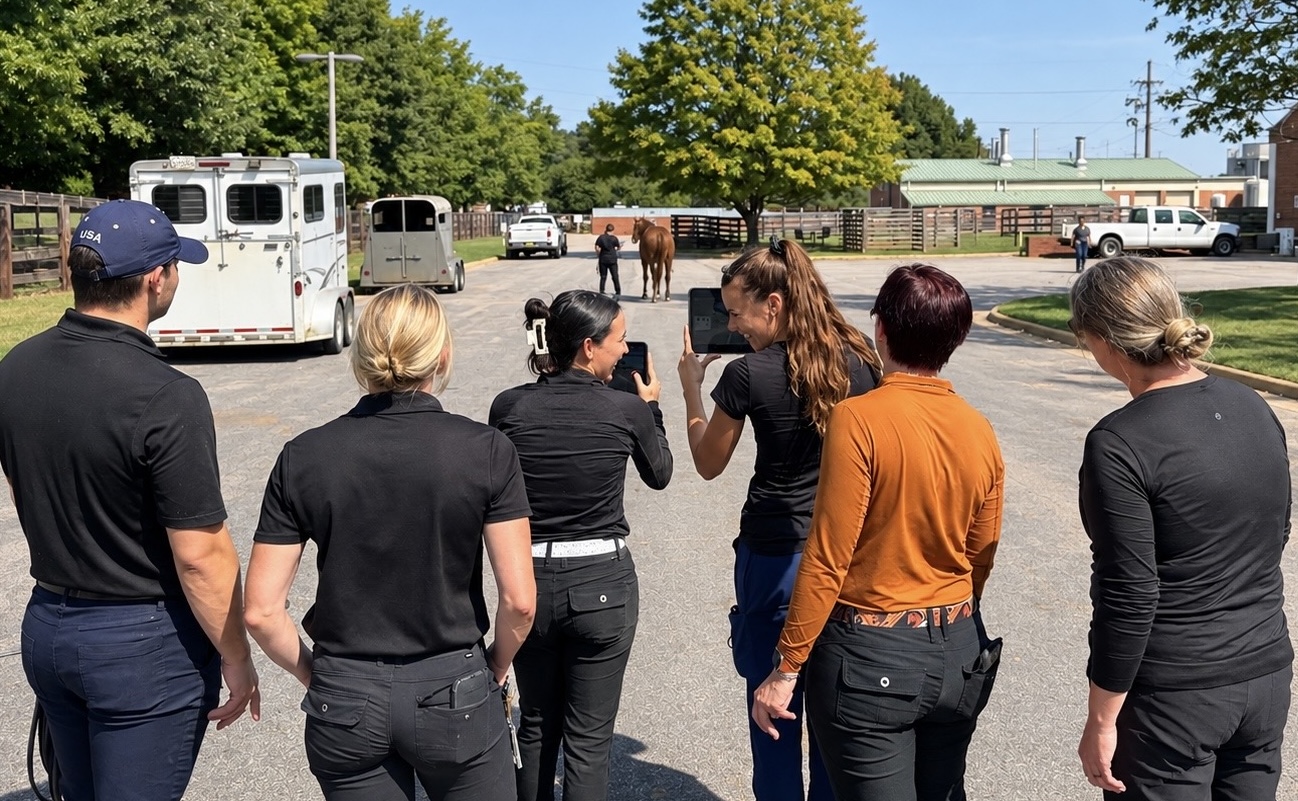
"t helps me evaluate the horse more objectively – which is valuable since we are all biased. Moreover, a system like Sleip helps with documentation and follow-up; and makes our assessment easier to explain to owners and riders. It can also be helpful in preventing lameness, by allowing us to compare examinations over time."
"Sometimes the rider can feel that something is not right in the way the horse moves, but we cannot see any changes with our eyes. Here technology has the advantage of being able to register even very subtle changes in gait, to complement the human eye."
"There might be a risk if vets shut down their own minds and brains and only look at what the system says. But a gait analysis system can never replace a veterinarian. It’s a good tool, just like other important tools, such as X-rays. Meanwhile, you must trust your own examination - eyes, experience and brains - to assess the information. For instance, sometimes the horse can be asymmetrical without being lame or vice versa."
I’ve found that most confident veterinarians are open to objective gait analysis, as they feel that it will help them in their job. But some are anxious that the system might have another opinion than they have and that this would make them insecure.
"That’s right, it was still in its prototype stage. Having worked with other gait analysis systems in daily practice, I saw the potential in Sleip; a smartphone app using AI computer vision to make objective gait analysis more accessible. I’ve always been interested in new technology. It has surprised me how much it has been developed since then. The team behind Sleip has been listening to its users and acting on our input - like developing the slow-motion functionality, which I really like."
"Most owners and riders have also been positive to our use of Sleip. Many sellers have come back with other horses after we have analysed one horse. It has proved a great tool in basic vet checks linked to sales."
"The groups opposing equine sports consist mostly of people who have little or no experience with the sport. Their ideas and opinion are based on emotions, not on knowledge. What they do really well is marketing their ideas, thus influencing many others."
"I feel that the FEI and other organisations should do a better job of standing up for equine sports and do a better job in showing how beautiful the work with horses and the equine sport is."
"Regarding horses in top sports, I think one should limit the number of shows for a horse per year. Horses need a vacation, too – just like people – to regain both strength and motivation. Recovery for the body as well as for the mind. It is critical to balance competition with time for the horse to relax and regenerate. For most horses, the best recovery would be to go out in the paddock, move freely and mentally recharge."
"When it comes to owning horses in general, I think there should be a sort of mandatory exam to inform people about horses’ basic needs – like regular exercise and the company of other horses. Some buy a horse and have no idea, which can lead to both physical and mental problems for the horse. I also think there should be better prevention of lameness and other injuries with a mandatory vet check every year for every horse, not only those competing."
"A mandatory health insurance would be beneficial for horse welfare; some horseowners may not visit the veterinarian for financial reasons. If one cannot afford a health insurance, one should not be allowed to own a horse."
"Well, firstly the very clever little grey pony, Maxi, that I used to ride - and fall off – as a child. It developed a habit going of going under fences - with the rider landing on top of said fences. Very funny, not at the time, but looking at it afterwards."
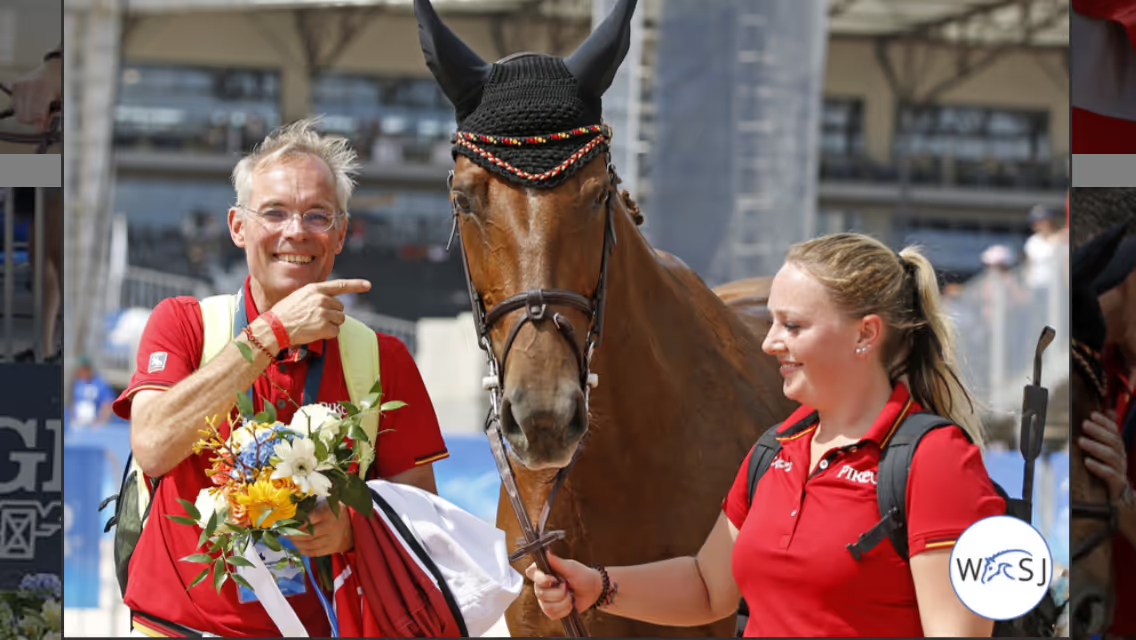
"The other horse that stands out for me is Alice, Simone Blum’s wonderful mare that she won the 2018 World Equestrian Games in Tryon on. She´s a very special horse, alert and awake – and not easy to befriend. But at the same time very wise, knowing when you wanted help, and thankful when you did. It’s very special when you feel a horse's appreciation."